
Heart disease detection (sample)
A finished EasySeer delivery for a heart-disease detection study on the 303 Cleveland records: a 17-page IEEE-format paper, 16 figures, the code, a cover letter draft and an AI-use statement.
ShPCN-Net selects attributes with a Gray Langurs Optimizer and classifies them with a hybrid convolutional network. It is tested on all 303 Cleveland records with stratified ten-fold cross-validation, against two ablation networks and three published model families.
The paper reports an honest outcome: accuracy 0.805, Matthews correlation 0.610 and AUC 0.897, and no significant difference between the six models tested. The optimizer reduced 13 attributes to 6.9 per fold on average. A negative or flat result is written up as it is.
The delivery folder holds the IEEE paper (PDF, Word and LaTeX source), every figure with the CSV of its plotted data, the Python code and its results, a reproducibility note, a cover letter draft and an AI-use statement. Author names and dates are placeholders for the scholar to fill in.
6 screens from this sample
Click any screen to enlarge it.
- 1
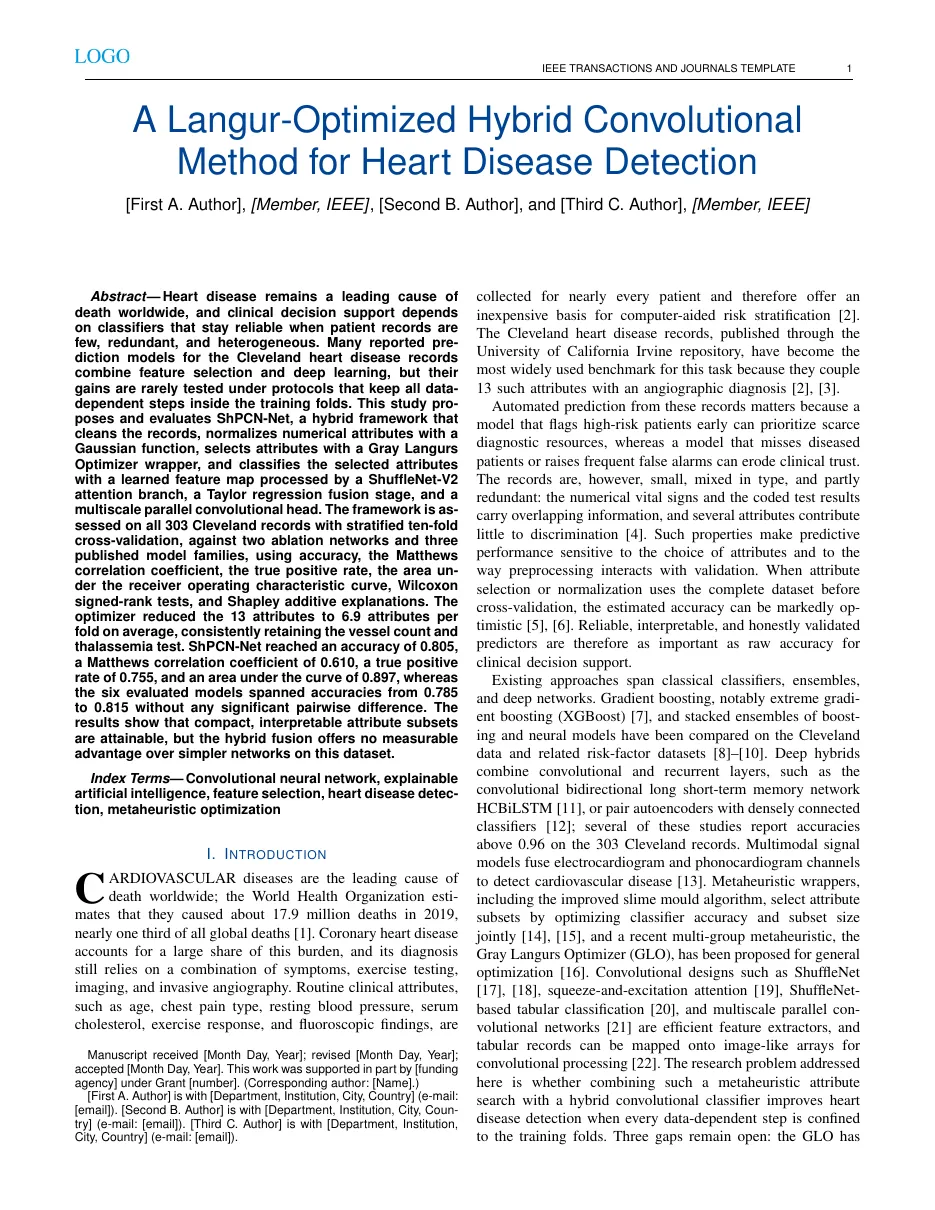
Abstract and introduction
The paper opens with a title, an abstract that states the real outcome, keywords and an introduction.
- 2
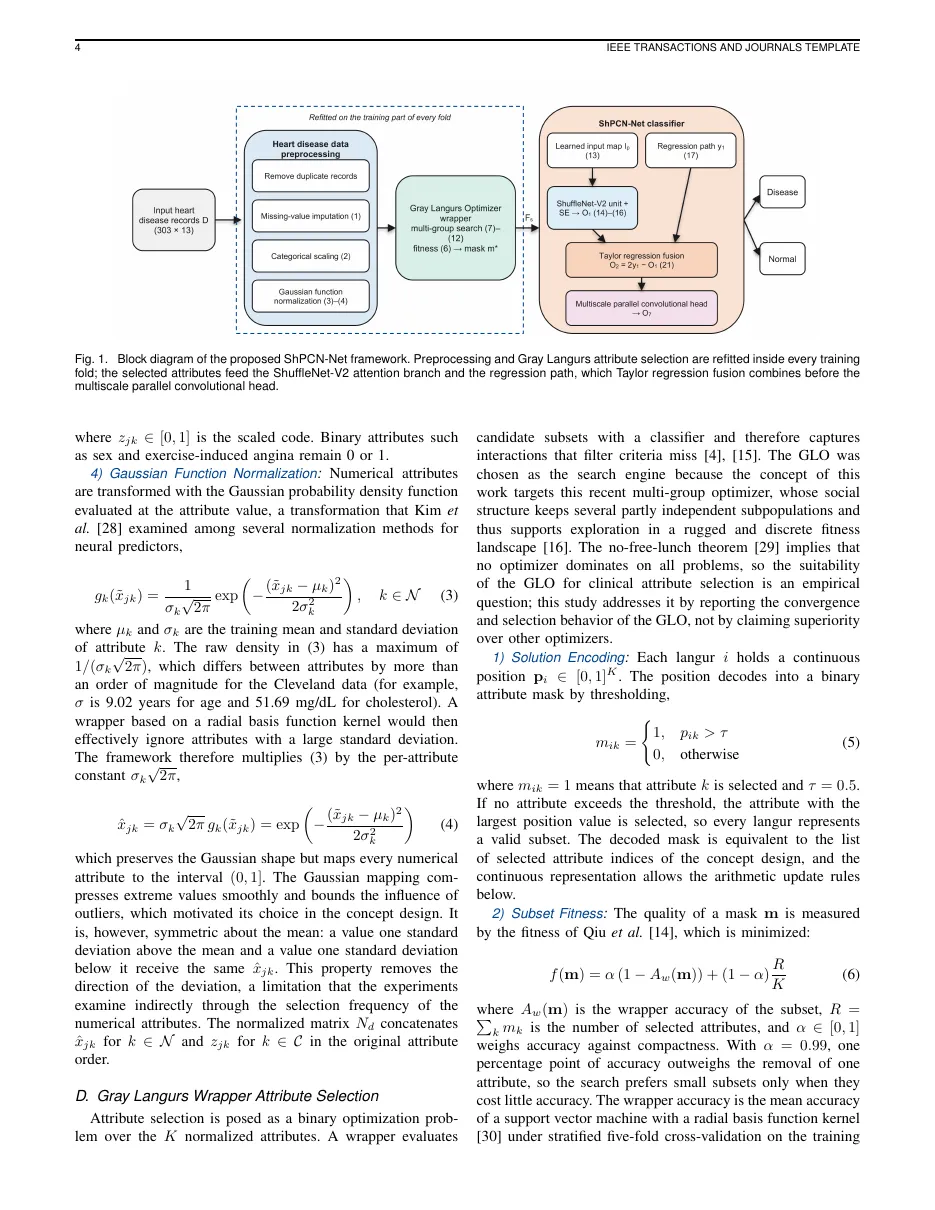
The method figure
The block diagram of the framework, with a caption that explains the cross-validation protocol.
- 3
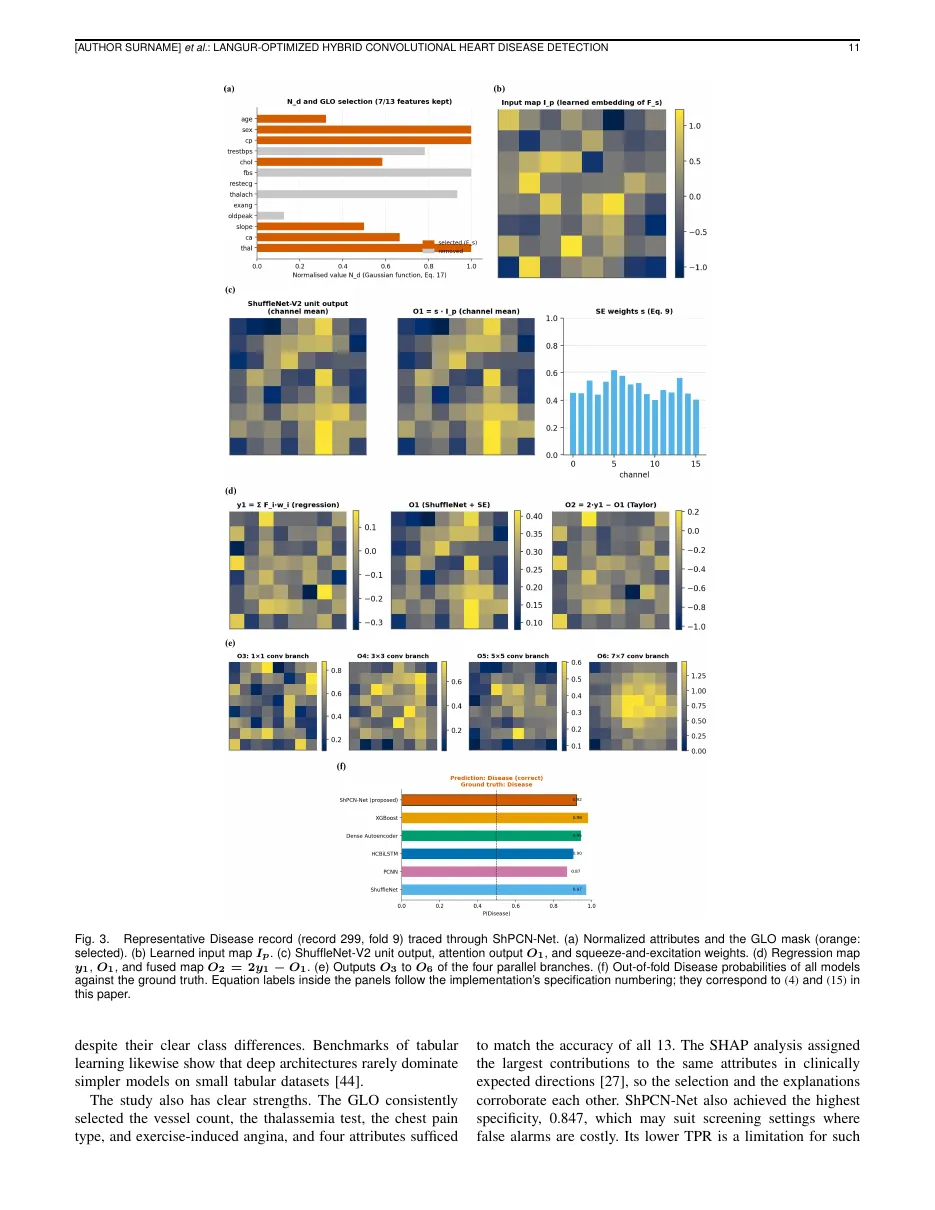
One record traced through the model
A single patient record followed from the normalised attributes to the prediction.
- 4
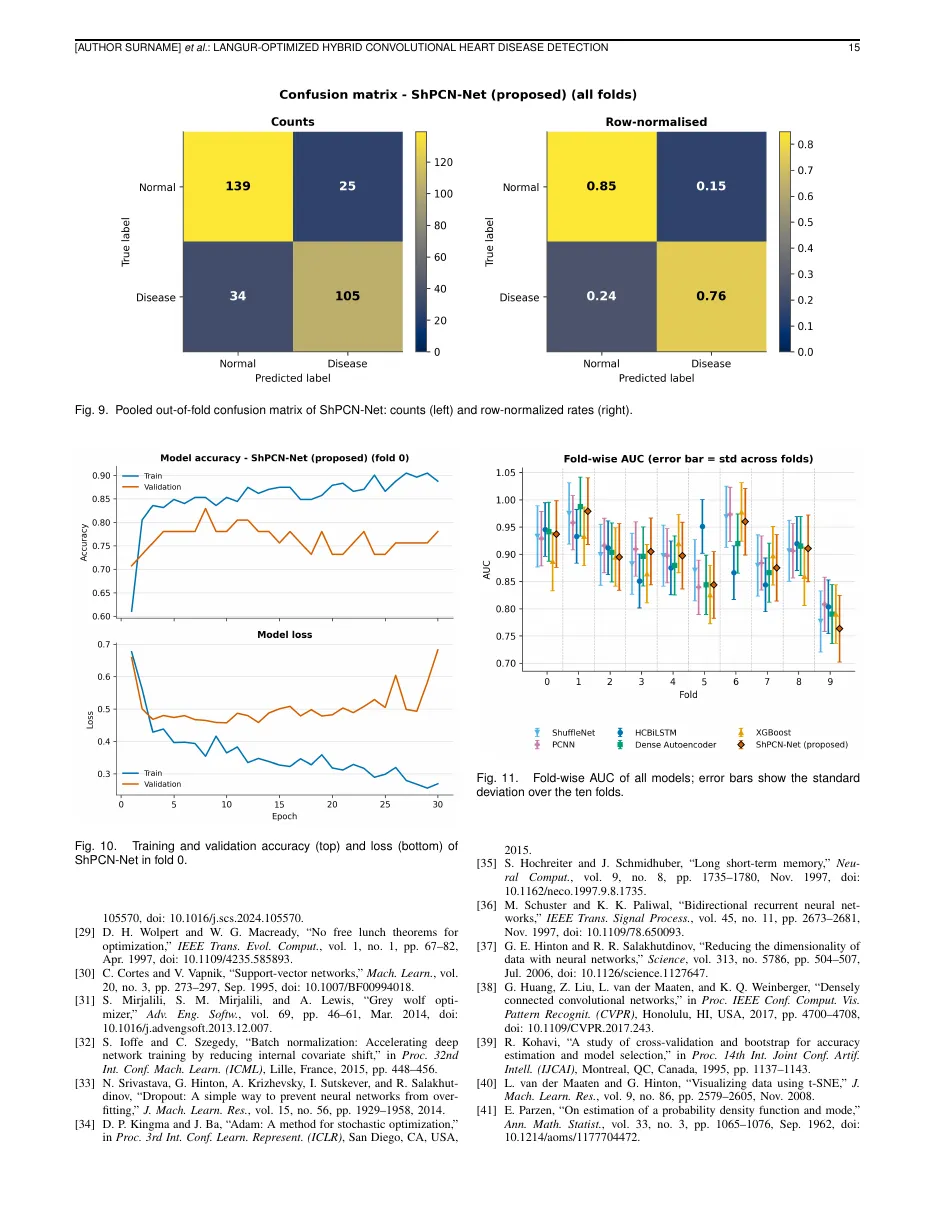
Confusion matrix
Pooled out-of-fold predictions, as counts and as rates.
- 5
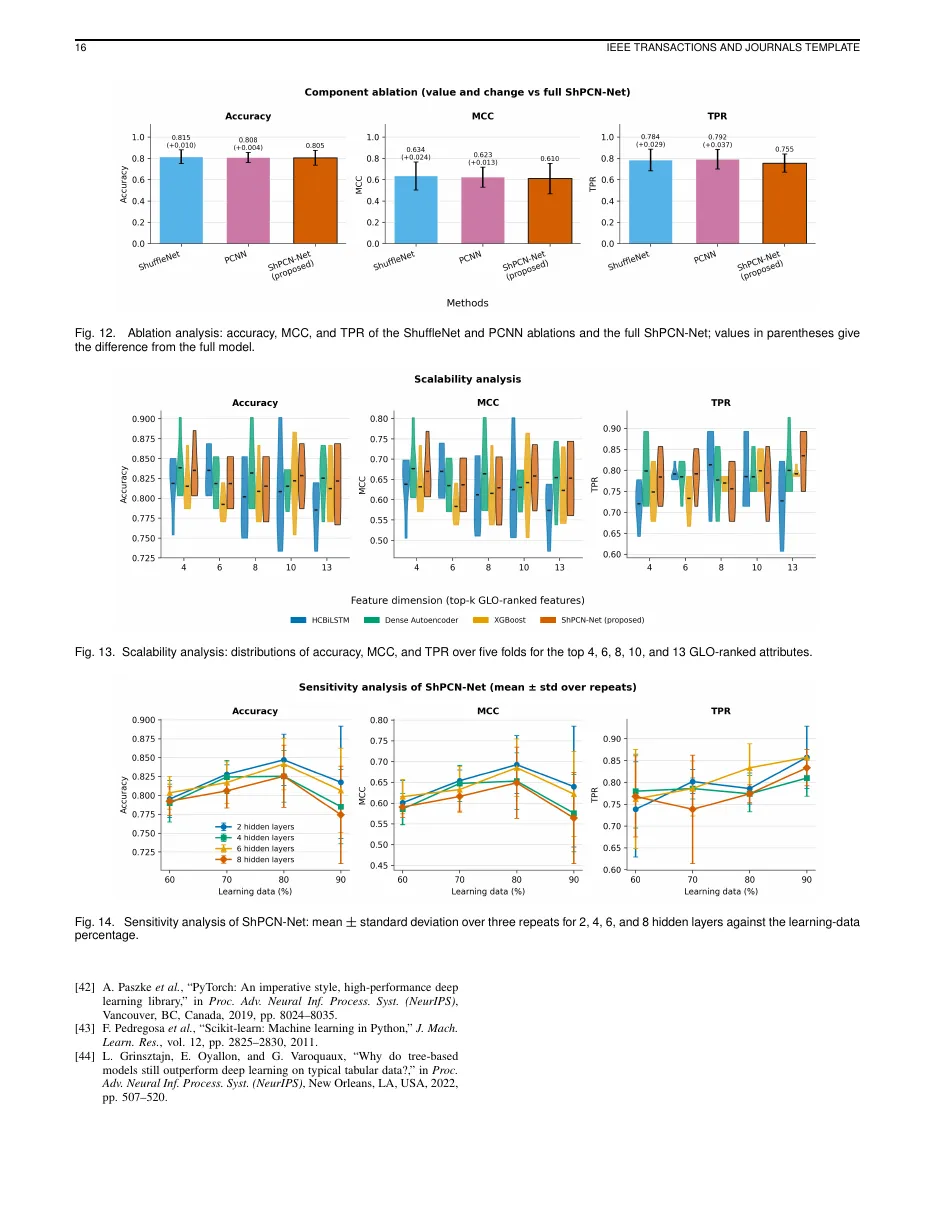
Ablation and scalability
Accuracy, MCC and TPR with parts of the network removed, and with fewer attributes.
- 6
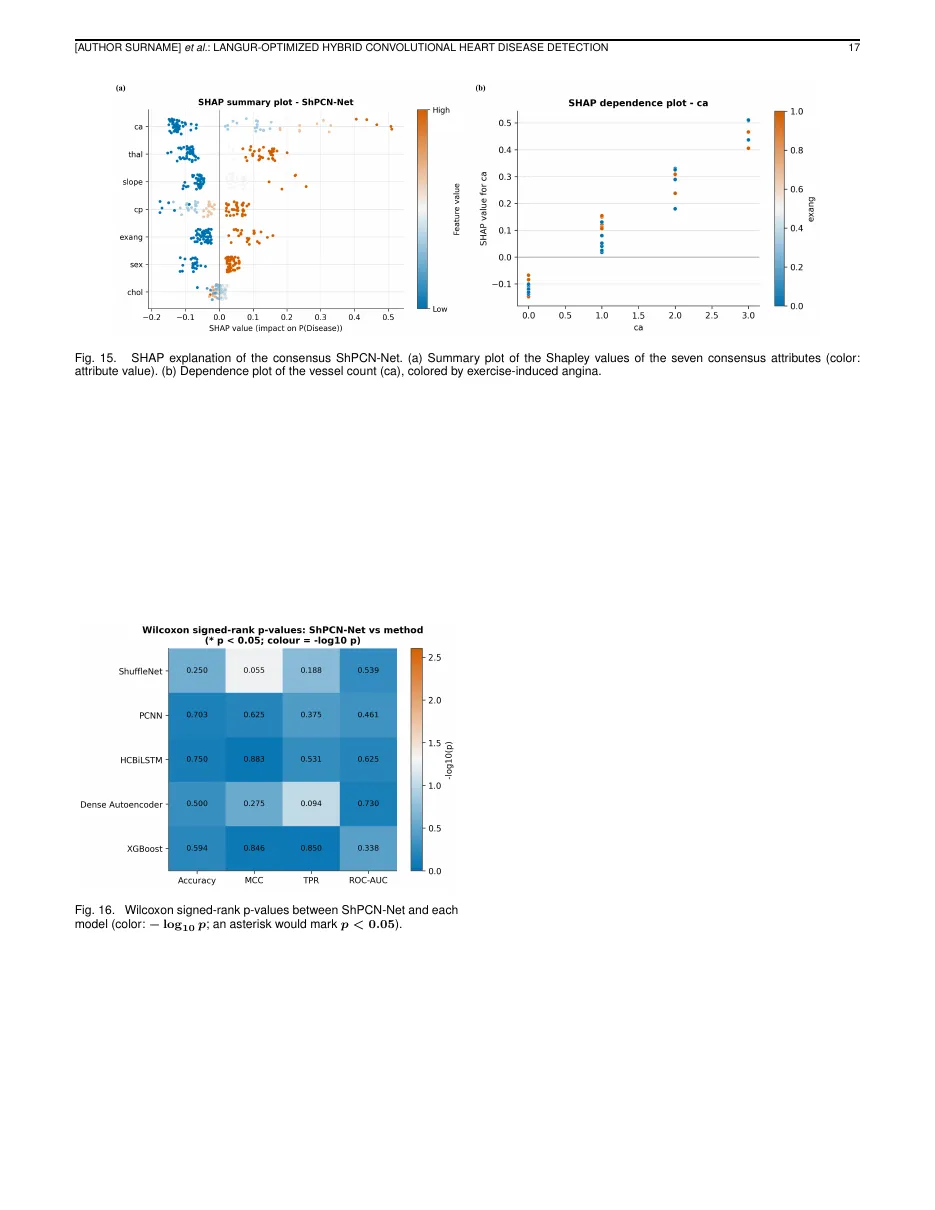
SHAP and significance tests
Attribute importance and the Wilcoxon tests that show no significant pairwise difference.
The delivered paper
Read all 17 pages here, or jump to the pages that matter.
Loading the PDF… 0%
Files
More samples
- Fruit classification and grading: A finished EasySeer delivery for a fruit classification and grading study: an 18-page IEEE-format pa…
Last updated 2026-11-09. EasySeer is AI. It creates only an initial draft from the novel concept you provide, and it is designed to follow academic ethical guidelines.